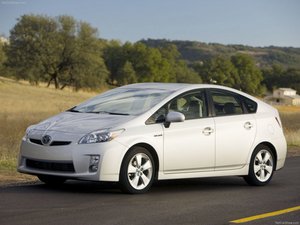
Toyota Prius, Toyota tarafından tasarlanmış hibrit bir elektrikli otomobildir. 2009'dan 2015'e kadar satılan üçüncü nesil, daha düşük bir sürtünme katsayısına sahip yeni bir gövde tasarımıyla tanıtıldı.
First i had intermittent yellow triangle show up on dashboard. After replacing master cylinder it worked for a couple days before brake booster motor died. After replacing it now i get all kind of weired codes and mechanics are frustrated. Parts were replaced new from dealer. Attached is a photo of current codes. Please advise where to start.
The "brake booster abnormally long" issue in 2009-2015 Toyota Prius models often relates to diagnostic codes like C1252 (Brake Booster Pump Motor On Time Abnormally Long) or C1256 (Accumulator Low Pressure). This problem affects the electronically controlled brake system, which includes the brake booster, master cylinder, and ABS pump/accumulator. Common symptoms include warning lights (ABS, Brake, Traction Control, or "Braking Power Low"), pulsating brake pedals, reduced braking power, or a chattering/honking noise from the pump, especially when the car is off.
The issue stems from internal leaks in the brake booster or master cylinder, faulty pump/accumulator, or worn O-rings, causing pressure loss. It’s a frequent problem in these Prius models, particularly at higher mileage (120,000–240,000 miles). Toyota’s Customer Support Program (ZJB) extended warranty coverage to 10 years or 150,000 miles for specific codes like C1391, but many owners face failures just outside this period, with repair costs of $2,000–$4,000 at dealerships.
Safety risks are significant, as reduced braking power can increase stopping distances or cause sliding, especially on slick surfaces. NHTSA investigations and a 2020 petition for a recall of ~1 million vehicles highlight the issue’s severity, though no comprehensive recall exists. Some owners opt for DIY repairs ($600–$1,500 for parts) using YouTube tutorials, but this is complex and requires diagnostic tools for brake bleeding. Used parts ($100–$150) or replacing ABS sensors (~$30) can be cheaper alternatives, though less reliable. Independent shops may charge ~$2,500 versus $4,000 at dealers.
Bu yoruma uygun yeri bulmak için bu konuyu kaydırın. Ardından, taşımak için "Bu yazıya yorum ekle"ye tıklayın.
2 Yorum:
Thank you John Schweitzer for the detailed answer. Can you send location, and how to get those o rings, and abs sensors as these are the only things not yet replaced.
Location: Inside brake booster pump or master cylinder, in the engine bay (driver’s side, near firewall). Hard to access, requires disassembling the pump/master cylinder.
Where to Buy: Toyota doesn’t sell O-rings separately. Get a used/aftermarket brake booster assembly ($100–$400) on eBay, Amazon (Dasbecan/VIPIH), or RockAuto. Generic O-rings at McMaster-Carr/Grainger ($5–$20) if you can measure old ones.
Tip: Replacing the whole pump is easier than rebuilding. You’ll need tools and a scan tool (e.g., Techstream) for brake bleeding.
ABS Sensors
Location: On front/rear wheel hubs, near brake rotors/drums. Easy to access after removing wheels (10mm bolt).
Where to Buy: OEM ($80–$120) at Toyota dealers (parts.toyota.com). Aftermarket ($15–$50) on RockAuto, Amazon, or AutoZone. Used ($10–$20) on eBay or junkyards (car-part.com).
Tip: Simple swap, 10-15 min per sensor. Clear codes with an OBD2 scanner after. Confirm codes (C1252/C1256) with a scanner.

 1
1